One of the most fascinating behaviors in the animal kingdom
happens within hours of birth. If you’ve ever watched a baby goose or duck
follow its mother closely just after hatching, you’ve witnessed a remarkable
phenomenon known as imprinting. But what makes these tiny hatchlings
latch on to their caregiver so quickly—and how do they even know who to follow?
The answer may surprise you: they don’t inherently
recognize their mother. Instead, they form an emotional and behavioral bond
with the first appropriate individual they see, a process that unfolds
during a brief and critical window early in life.
What Is Imprinting?
Imprinting is a built-in biological mechanism in
certain animals, especially birds, that allows newborns to form a strong
attachment to a caregiver. This process happens only once and is irreversible.
It's not based on memory or learning through reward, but on an innate drive to
bond for survival.
The window for this bonding—called the critical period—typically
lasts only a few hours after birth. During this time, the hatchling will
imprint on the first moving object that seems like a caregiver, usually its
mother. But if a human or even another animal is present instead, the newborn
may attach to them just as strongly.
The Science Behind the Discovery
Although Douglas Spaulding, an English biologist,
first observed this behavior in 1873, it wasn’t until decades later that
imprinting was formally studied and understood. German zoologist Oskar
Heinroth rediscovered it and passed his insights to his student, Konrad
Lorenz, an Austrian scientist widely considered the father of modern
ethology (the study of animal behavior).
In the 1930s, Lorenz conducted now-famous experiments where
he hatched greylag goose eggs and made sure the goslings saw him first. The
result? The goslings treated Lorenz as their mother, following him loyally—even
ignoring actual geese in favor of him. This work earned Lorenz a Nobel Prize
in 1973 and changed how scientists understand animal development.
How Long Does the Imprinting Period
Last?
The timing of imprinting varies slightly across species:
- Greylag
Geese: Critical period lasts about 13 to 16 hours.
- Mallard
Ducklings & Domestic Chicks: Critical
period closes by 30 hours post-hatching.
Once imprinting occurs, it cannot be undone. The bond
remains for life, influencing both social and mating behaviors.
Why Imprinting Matters in Nature
Imprinting is more than just following a parent—it plays
several key roles in survival and reproduction:
For Offspring:
- Ensures
safety by keeping hatchlings close to a
protector.
- Establishes
social learning, guiding behavior and future
interaction.
For Parents:
- Directs
care to their own biological young, avoiding
wasted effort on unrelated offspring.
For Future Reproduction:
- Shapes
mate selection, encouraging animals to seek out
similar species and avoid inbreeding or hybridization.
Unlike learned behaviors that rely on repetition or reward,
imprinting is automatic and instinctive, emphasizing its
importance in the early stages of life.
Key Insights to Remember
- Imprinting
is fast and permanent, happening within hours of birth.
- It
ensures survival, helping hatchlings recognize and
follow a caregiver for protection.
- Konrad
Lorenz’s research revolutionized our understanding
of how animals form early-life bonds.
- Species-specific
timing means imprinting must happen
within a narrow window or not at all.
- It
influences not only behavior, but also mate selection,
playing a role in long-term genetic survival.
Imprinting highlights just how deeply instinct and
environment work together to shape behavior—and how critical the first few hours
of life can be in setting the path for the future.
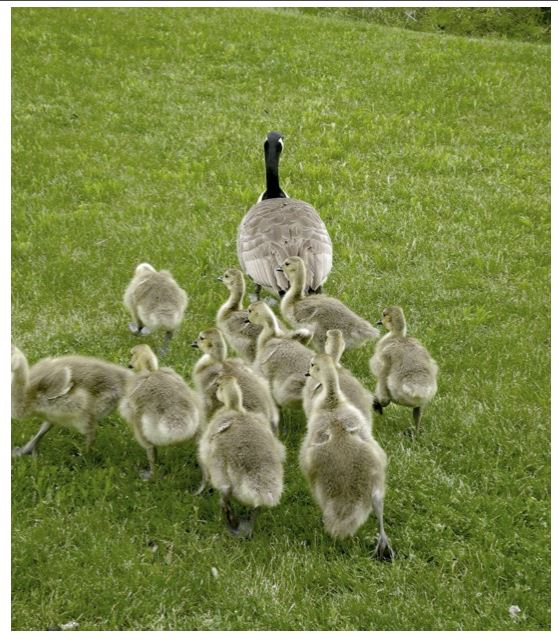 |
| Several studies conducted with young birds have demonstrated that the imprinting response is instinctive, revealing that these birds lack inherent recognition of their biological mother. |

No comments:
Post a Comment