A periodic table looks like a piece of office furniture: a grid of boxes, printed and pinned up, that most people walk past. It is also the single most useful invention in the history of chemistry, and almost everything it does is invisible unless you know what to look for.
This article explains what each square actually tells you, why the table has the shape it has, and how a new element gets added to it.
What Is Actually in One Square
Every element has a square, and every square carries the same five facts. An element is identified by its name, its symbol, and its atomic number. The atomic number is the important one. It counts the protons in the nucleus, and no two elements can share a proton count. Iron is 26. Gold is 79. That is why the number, not the name, is the real identity.
The other two facts are the standard atomic weight and the electron configuration. The first is a mass; the second is a description of how the electrons are arranged. Both matter, and the reason the weight is not a single clean number is the most interesting thing on the table.
Sodium, for example, has an atomic weight of 22.990 and sits at atomic number 11. Gold has an atomic weight of 196.967 at number 79. Neither number is the weight of a single atom. Each is an average across the isotopes of that element, weighted by how common each isotope is in ordinary material.
 |
| Sodium is element 11. Its atomic weight of 22.990 is an average across its isotopes, not the mass of one atom. Image: Dnn87, CC BY-SA 3.0, via Wikimedia Commons |
Why Some Numbers Are in Square Brackets
On the official IUPAC table, some atomic weights are written as a single number with an uncertainty in brackets after it, such as 22.989 769 28(2). Others are written as a pair of numbers inside square brackets, such as [1.007 84, 1.008 11] for hydrogen. Those two notations mean different things, and the difference is easy to miss because both use brackets.
The ordinary form, 22.989 769 28(2), gives one best value and says how tightly it is pinned down. The (2) means the last digits are certain to within two units in the final place. That is a measurement with an error bar.
The interval form, [1.007 84, 1.008 11], gives a range and says something different: we know the value lies somewhere between these two numbers, and we cannot narrow it further. That is not a sloppy measurement. It is an honest statement about how variable the material is. Hydrogen is unusual because its isotopes are spread across several different industrial and biological processes, so genuine natural samples differ from each other.
So the brackets are not decoration. A number in square brackets tells you the weight depends on which sample you measure. A number with a (2) after it tells you the measurement is as precise as it claims. Reading the notation is part of reading the table.
Three entries from the official standard atomic weights table, showing the two notations.
| Element | Standard atomic weight | What the notation says |
| Sodium | 22.989 769 28(2) | One best value, certain to within 2 units in the last place |
| Hydrogen | [1.007 84, 1.008 11] | An interval: natural samples genuinely differ across this range |
| Iron | 55.845(2) | One best value, certain to within 2 units |
Weights from the CIAAW Standard Atomic Weights table. Elements with no stable isotope have no standard weight at all.
Why some elements have no number
Technetium, atomic number 43, has a dash in the weight column. So do promethium and every element from polonium upward. An atomic weight is an average over isotopes as they occur in nature, and these elements have no stable isotope to average.
Technetium does exist. It occurs in trace amounts in uranium ores that decay very slowly. But there is not enough of it, and its isotopic composition is not fixed enough, to define a standard value.
Why the Table Has This Shape
The table is not arranged by mass or by how useful an element is. It runs by atomic number, counting up by one from left to right, then starting again at the left on the next row. That is why hydrogen, number 1, sits alone in the top corner, and helium, number 2, sits alone beside it rather than next to lithium.
A row is called a period. A column is called a group, numbered 1 to 18. Atomic number governs the proton count, and the proton count governs how many electrons a neutral atom has. Filling the table in atomic-number order is therefore the same as filling it in electron-count order. The shape is a consequence of the physics, not a design choice.
 |
| Groups run 1 to 18 across, periods run down. Each step to the right adds one proton. Image: Offnfopt, public domain, via Wikimedia Commons |
The vertical columns are where the chemistry gets predictable. Elements in the same group have the same number of electrons in their outermost shell, and that is why they behave alike. The alkali metals in group 1 -- lithium, sodium, potassium -- each have one electron in that outer shell, which is why each reacts violently with water. Sodium melts at 97.8 degrees Celsius and potassium at 63.5. Both are soft, and both conduct well. They are recognisably the same family of metal.
Reading down a column tells you something different. Each step down adds a whole new shell of electrons, and those shells fill in a fixed order that is the same for every element. That fixed order is why the table has blocks, and why the heaviest naturally occurring elements sit in a separate pair of rows pulled out at the bottom.
Three metals from group 1, which share an outer electron count and behave alike.
| Element | Atomic number | Melting point | Density |
| Lithium | 3 | 180.5 degrees Celsius | 0.534 |
| Sodium | 11 | 97.8 degrees Celsius | 0.97 |
| Potassium | 19 | 63.5 degrees Celsius | 0.86 |
The Table Was Not Obvious
Nothing about the arrangement follows from first principles. A chemist has to notice the pattern before a table can encode it. Several people did, independently and in different countries.
John Newlands published an arrangement in 1866. His rule was the law of octaves, in which elements with similar properties sat eight apart, the way musical notes in an octave repeat. It worked for the first few rows and then broke down.
Antonius van den Broek improved on it in 1904. He proposed that each element has a fixed place, and that its properties follow from a number he called the atomic number. At the time nobody could measure that number.
 |
| Van den Broek proposed the atomic number as the ordering principle in 1904, before the proton had been identified. Image: Antonius van den Broek (1870-1926), public domain, via Wikimedia Commons |
Dmitri Mendeleev published his table in 1869, and his name is the one most people attach to it. His achievement was not only the arrangement but what he did with the gaps. He left empty squares where no element was known, and wrote down the properties he expected the missing one to have, including its approximate atomic weight. When those gaps were later filled with elements matching his predictions, the arrangement stopped being a pattern and started being a law.
 |
| The 1871 revision showed predicted elements in detail, which is what made the gaps a testable prediction. Image: Den fjättrade, public domain, via Wikimedia Commons |
The van den Broek idea and the Mendeleev table were separate lines of work that arrived at the same ordering. Mendeleev ordered by atomic weight. Van den Broek ordered by atomic number. For most of the table the two give the same answer, but they differ in a few places, and those places are where the heavier elements sit.
The heavy end is the awkward part
Ordering by weight breaks down as the elements get heavier. Tellurium weighs about 127.6 and iodine about 126.9, so iodine is lighter, yet iodine has to sit after tellurium because its atomic number, 53, is higher than tellurium's 52. The modern table orders by atomic number, and this inconsistency disappears.
The same awkwardness applies to the noble gases. Helium, neon, argon and the rest do not resemble their neighbors at all. They were placed at the far right, in group 18, only after their inertness was understood. At the time Mendeleev built his table there was no column for them, because they had not been found.
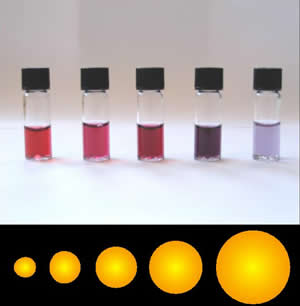 |
| Gold sits at atomic number 79, in group 11. Its atomic weight of 196.967 is an average across its single stable isotope. Image: Aleksandar Kondinski, CC BY-SA 4.0, via Wikimedia Commons |
The last element
The table now ends at oganesson, atomic number 118, named for the Russian physicist Yuri Oganessian. The discovery is unusual. The work was done jointly by the Joint Institute for Nuclear Research in Dubna and the Lawrence Livermore National Laboratory in California, and IUPAC confirmed it in 2015. Element 118 was first reported in 2002. It is so unstable that only a few atoms have ever existed at one time. Its mass is recorded as [294], in brackets, because 294 is the mass number of the longest-lived isotope rather than an averaged standard weight.
Four elements from the ends and middle of the table.
| Element | Number | Group | Period |
| Hydrogen | 1 | 1 | 1 |
| Iron | 26 | 8 | 4 |
| Gold | 79 | 11 | 6 |
| Oganesson | 118 | 18 | 7 |
How a New Element Gets Added
Adding an element is slow and deliberately hard, because a claim of discovery has to be checked against agreed criteria before it counts. IUPAC and IUPAP set out those criteria, and the process has a fixed shape.
- The claim is assessed against the discovery criteria. A laboratory has to show the element was actually made, and not merely detected.
- If the claim is accepted but the element has no agreed name yet, it is given a temporary name and symbol made from its atomic number. That is how element 113 was called ununtrium with the symbol Uut.
- The laboratory whose discovery is credited is invited to propose a name and symbol.
- IUPAC reviews the proposal, puts it out for a five-month public comment, and then formalises it.
The temporary-naming step is worth understanding, because it explains the otherwise odd names. A systematic name is built from the digits of the atomic number. That stops an element being given a name that already means something else, and stops two elements ending up with the same one.
This is also why the boundaries are firm. A periodic table is not an opinion. If a discovery does not meet the criteria, it does not go in, and the table does not gain a box because a claim was published.
A test you can do with sodium
The clearest demonstration that the table predicts behavior is color. A few elements give off a characteristic color when their salts are heated in a flame. Because that color comes from the electron arrangement, elements in the same group show the same one.
Sodium produces a bright yellow flame, the yellow of streetlights. It is strong enough to swamp almost every other color in the same flame. That is why sodium contamination is a persistent problem in laboratory glassware, and why astronomers use filters to remove it when they observe stars.
 |
| Sodium's yellow color comes from two specific wavelengths in its spectrum, not from a general glow. Image: Tfaub, public domain, via Wikimedia Commons |
The test is simple: warm a small amount of a sodium salt in a flame and the yellow appears. It is the same reason sodium lamps on a road give off that color. And it is the same reason sodium, at atomic number 11, behaves so much like potassium at 19 and lithium at 3.
Key Terms in Plain English
These are the words used above, defined as they are used here.
| Term | What it means here |
| Element | A substance made of atoms that all have the same number of protons |
| Atomic number | The count of protons in an atom; no two elements share one |
| Isotope | Atoms of one element that differ in their number of neutrons |
| Standard atomic weight | The average mass of an element's atoms in natural material, relative to carbon-12 |
| Interval | A range of values, written in square brackets, when natural material varies |
| Period | A horizontal row of the table, corresponding to one electron shell being filled |
| Group | A vertical column, numbered 1 to 18; members share an outer electron count |
| Electron configuration | The arrangement of an atom's electrons among its shells |
| IUPAC | The international body that maintains the table, approves new elements and sets group numbering |
| Noble gas | An element in group 18 with a filled outer shell, so it rarely reacts |
Terms used in this article, in the sense they are used here.
Key Takeaways
- The atomic number identifies an element. It counts protons, and no two elements can share one.
- Atomic weights are averages across isotopes, not the mass of a single atom.
- A weight in square brackets is an interval, not an error bar. It means natural samples genuinely vary.
- Elements with no stable isotope, including technetium, have no standard atomic weight at all.
- The table is ordered by atomic number, filling left to right, one proton at a time.
- Elements in the same group have the same number of outer electrons, which is why they behave alike.
- Mendeleev left gaps for undiscovered elements and predicted their properties, which is what made the table a testable law.
- Ordering by atomic number rather than weight fixes the tellurium and iodine problem in the heavier elements.
- A new element must meet agreed criteria, gets a temporary name first, and goes through a public comment before it is named.
Frequently Asked Questions
Why is the atomic number called the "magic number"?
Because it does all the identifying work. Mendeleev had to order by atomic weight because that was the only quantity he could measure. Van den Broek proposed in 1904 that the real ordering should be by a whole number per element, and that the properties should follow from it. That number turned out to be the proton count, which had not been identified yet.
How many elements are there now?
No. The table ends at 118, oganesson, confirmed by IUPAC in 2015. Elements above 100 exist only for fractions of a second. The table may yet grow.
Why are some atomic weights not whole numbers?
Because they are averages, not single masses. Chlorine is about 35.45 even though no chlorine atom weighs exactly that. Roughly three quarters of natural chlorine is one isotope and one quarter is a heavier one, and the tabulated figure is the blend.
Do the atomic weights ever change?
Yes, and deliberately. CIAAW revises them as better measurements arrive. Gadolinium, lutetium and zirconium were all revised in 2024. A revised weight does not mean the elements changed; it means the measurement improved.
Is the periodic table finished?
No. Elements 119 and 120 have been attempted. Any that are confirmed would begin an eighth period, below the two rows of heavy elements now pulled out at the bottom.
Key references
• IUPAC: the periodic table, and how new elements are added
• CIAAW: Standard Atomic Weights
• RSC: oganesson, element 118
• RSC: sodium, element 11
Images: Wikimedia Commons, with the author and license named in each caption. Figures are the abridged standard atomic weights; where the official table gives an interval, the full range is shown here.

No comments:
Post a Comment